Wednesday, February 10, 2010

FIPP2010 (Feira Internacional das Pedras Preciosas), Teófilo Otoni, Minas Gerais


FIPP2010 (Feira Internacional das Pedras Preciosas), August 24-28, 2010, Teófilo Otoni, Minas Gerais

Wow! Time sure is flying. Seems like only yesterday we were all biting our nails, down here, wondering how FIPP2009 was going to turn out, especially after the June gem show in Governador Valadares was cancelled suddenly just before the event.

Turns out that FIPP2009 was better than everyone's drastically lowered expectations.

News from dealers in Tucson is that sales were better than expected.


Tuesday, October 27, 2009

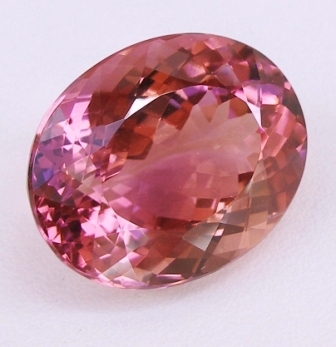
Baby blue and baby pink iridescent bicolor tourmaline bought in Teófilo Otoni


OK, I admit it! I am a sucker for tourmalines, I really am.

When I saw this baby blue/baby pink bicolor tourmaline, I fell in love. The internal iridescence is just icing on the cake!


Wednesday, October 21, 2009

"Campbell Bridges 1937–2009: The Bridges' Family Needs Your Help" by Lisa Brooks-Pike, RGA

Dear Readers,

Movies such as "Born Free," "Safari," "King Solomon's Mines," "Mountains of the Moon," "A Nun's Story," "The Snows of Kilimanjaro" (and the book by Hemingway, of course), and "Out of Africa," and the books The Golden Impala, West with the Night, The Lion, The Poisonwood Bible, The Blue Nile, The White Nile, and many others have all informed my images of Africa, although I have never travelled there.

I didn't know Campbell Bridges. I had read only sporadically about him.

But the poignancy in his son's telling of his death, the survivor's remorse, the way we can see that he keeps playing it over in his head, thinking that if only, if only he had done something differently, his beloved father would not have died.

It's heartbreaking.

No one deserves to die like that.

Lisa Brooks-Pike has written a moving article of her interview with Bruce Bridges, and she is appealing to us to step up to the plate and sign the petition for justice for Campbell Bridges in an attempt to move Kenya to act as a nation of law.

Tenney


Campbell Bridges 1937–2009: The Bridges' Family Needs Your Help

by Lisa Brooks-Pike, RGA

It was an honor to meet recently with Bruce Bridges, son of Campbell Bridges, in the office of Tom Elliot, owner of the North American Gemological Laboratory (NAGL). Within moments of Bruce’s arrival, it was clear that he had the same great qualities and values as his father, and his passion for family and Tsavorite is extraordinary. Bruce and his family have suffered great adversity and even greater loss yet Bruce’s dedication to his father’s lifetime of work and to Tsavorite drive him forward with amazing strength and focus.

Bruce’s visit to NAGL was driven by this passion and dedication. He was there to honor Campbell, and protect the Scorpion mine and the brilliant vanadium-bearing grossular garnet known as Tsavorite. Bruce brought with him a carry-on bag filled with the Scorpion Tsavorite selected as the cream of the crop by Campbell before his brutal murder.

Like a child seeing the moon for the first time, I was in awe of the material Bruce carefully laid out on the desk before us. It was all beautiful – perfect in deep green color, expertly cut and meticulously polished. I expected as much from material hand-selected by Campbell Bridges; I did not expect to be equally awed by his son. Bruce knew every detail of every stone as if he had nurtured and raised them as children. He could touch one and with that touch he knew the exact carat weight and every tiny detail of that gem. These stones were special.

Bruce shared the largest gem quality Tsavorite to come out of the Scorpion mine – a 20.24-carat wonder. I held my breath as it lay in my hand. "The Scorpion King," I thought. Equally as impressive was the perfectly matched suite of graduated pear-cut stones that made their way to a center pear worthy of royalty: his Queen.

The 44 best stones were selected, all over 3 carats, all breathtaking. These 44 stones were about to receive a special inscription by Tom to identify them as Tsavorite mined under the watchful eye of Campbell Bridges. Watching the first stone being inscribed to honor Campbell and protect what he had created was a very emotional and moving experience, but paled in comparison to Bruce’s story.

Bruce’s own account of this tragic event was both heartbreaking and infuriating. He spoke of that awful day as a son who has suffered irreversible loss, but also as one who refuses to give up and bravely fights on through his sorrow. When we spoke he informed us that the local government had only one man in custody, even though he and his security team had provided them with the full names and photographs of the attackers. As of this writing, no other has been arrested, and the man in custody has been released.

He spoke of the current status of the Scorpion Mine with very real trepidation; while Bruce is currently paying armed guards to protect the mine, no one is there to work it. Mining has ceased, and he does not know when security will be established to enable mining to resume. "We wait to see if the government will reestablish protection for the legal miners," he says.

To say that there has been little action regarding the apprehension of Campbell’s murderers would be a gross understatement. There has been some misinformation regarding the identity of the attackers. While some published reports convey the idea that the attackers were locals, Bruce’s own words in his interview with the BBC say something different. Taken from the interview: "There were several politicians, that for their own greed, funded bandits, gangsters and these criminals, and it's the criminal, it's criminals that we fought with, not farmers. The people that murdered my father were known criminals." In fact, Bruce told me that "the vast majority of attackers were Kenyan Somalis with a couple local gangsters."

Bruce has sought the aid of the British and U.S. embassies, but has been informed by both that without a direct invitation by the Kenyan government, they cannot intervene. Tsavorite U.S.A. has sponsored a petition aimed at creating some forward movement and bringing more attention to this tragedy. As of right now, they need only 22 additional signers to reach their goal of one thousand.

I would like to personally urge anyone who has taken the time to read this article to click on the link, sign the petition, and help to bring to justice the murderers of a man who did so much for so many, without asking anything in return.

UPDATE: the petition has reached its goal of 1,000 signatures -- thanks to everyone!

Please click here and sign the petition: http://www.thepetitionsite.com/130/justice-for-campbell-bridges

Bruce Bridges' interview with BBC: http://news.bbc.co.uk/2/hi/africa/8199627.stm

Update:

From Bruce Bridges: "Three men have been arrested and one man released. None of these men are the masterminds but mid to lower tier in the murder, yet are all involved."

Article published online at the site of the Jewelers Ethics Association:

Tuesday, October 13, 2009

Kicking myself in the posterior again -- Andalusite becoming very rare in Teófilo Otoni


Does anyone still remember when andalusite was a humble stone, unworthy of great consideration?

Sigh......

Oh! The stones I could have bought for mere centavos a few years ago.

[That was until IBAMA, the Brazilian environmental protection agency, decided to shut down the mine because it was polluting the area.]

To be continued...

Wednesday, October 7, 2009

Faceted Green Amber for Sale in Teófilo Otoni -- Part II

Green Amber
A few months back, I wrote a post about the faceted green amber I had seen in Teófilo Otoni, earlier this year.

I am happy to report that some of the best pieces were still at the dealer's office when I went to see him, yesterday, and I am going to break down and buy one of these incredible beauties (for study purposes, of course!).
Green Amber

For those of you who have not seen the first post, here is the link:


Right now, I have only very bad photos that don't come anywhere near to showing the wonderful liquid green-gold lights bouncing off those facets -- here is what I have, but I will post new photos once I get back to Conquista and am able to use my old 4 Mp Olympus D580, which has good sensors for yellows and greens. (The stones in the background of the top photo are chrysoberyls.)

Copyright © 2009 N. Tenney Naumer -- All rights reserved.

More info on the formation of amber here:

Tuesday, September 22, 2009

Good news in earlier today from Teófilo Otoni gem dealers exhibiting at the 2009 Hong Kong Gem Show

The news from Praça Tiradentes this morning is that so far sales have been good in Hong Kong for the Teófilo Otoni gem dealers.

What a break this is after lackluster sales earlier in Bangkok and at the FIPP2009.

As expected, the best movers were the larger, high-quality aquamarines, alexandrites, and tourmalines, in particular the indescribably beautiful mint green tourmalines from the Pirineo mines.

Among the sellers from Teófilo Otoni with stands in Hong Kong are: Oswaldo Tavares, Marcelo Gemas, Mamão, Duarte & Bastos, and Emerson Tavares. (Remember that Teófilo Otoni is a very small town, and the well known sellers may be recognized by only their first names.)

Stands in Hong Kong can cost US$8,000. Add to that the cost of flying and hotel rooms, and if these dealers are sending happy news, then they must really be pleased!

Copyright © 2009 N. Tenney Naumer -- All rights reserved.

What I wouldn't give for one of these beauties from Pirineo!
Pirineo Green Tourmaline
Photo by Anfilófio Bastos, 2009.

Gorgeous, enormous, and problematic green tourmalines in Teófilo Otoni

Green Tourmaline Teófilo Otoni

Let's talk about these two beauties.

The first one, at the top (or on the left, depending on how your browser displays this page), is actually green going into blue-green. It is a good 2 inches long. If you were to buy it for yourself, all well and good. But if you are buying it to resell, what to do? What types of clients do you have? For example, what is a jeweler going to do with such a long stone? Really, it is too long to put in a ring. Should it be set into a pendant? I dunno. A pendant would not really show off the beauty of this stone. What about a brooch? Do you have jeweler clients who specialize in making brooches? Hmmm. This leaves you with thinking about your clients who are collectors and who are not interested in setting this stone. It is a marvelous example of a flawless bicolor tourmaline that goes from green into blue-green.

OK, now let's have a look at the second stone on the right (or below). This beauty has even more problems than the first one. This stone is so large that it is next to impossible to set (if I remember correctly, it was somewhere between 40 and 60 carats). This leaves it for a collector. But look at the cut. Look at the table. Hellooo! Really nice window to the bottom, isn't it!

You could have the stone recut as a round, but it might still be way too large to put in a ring, unless you are willing to lose a lot of carat weight. And for that, you need to pay a low-enough per carat price, because basically we are talking about rough here now, aren't we?

This stone is a perfect example of the prevailing tendency (by the less sophisticated dealers) here in Brazil to cut the stone as large as possible. This is called to aproveitar the stone (or to "take advantage" of the stone). They will have the stone cut as large as possible while still avoiding inclusions. Some of the really unsophisticated sellers will have the stones cut even larger and include inclusions in the belief that size is more important than an obvious flaw.

Copyright © 2009 N. Tenney Naumer -- All rights reserved.

Monday, September 21, 2009

On Pink Tourmalines from Araçuaí, Minas Gerais -- To Heat or Not To Heat

The tourmaline mines around Araçuaí in Minas Gerais are aptly famous for their pink tourmalines, although they have great greens, as well.

Pink tourmalines from Araçuaí are routinely heated because they often have a strong underlying brown tone. You can see examples of unheated and heated in this image taken in a dealer's office in Teófilo Otoni in March this year (click on the image to see the entire photo):
Pink Tourmaline Araçuaí

Generally speaking, many of these pinks look very light and washed out in daylight, but at night, under incandescent light, they have a wonderful color shift and change to a brilliant cherry color, although the brownish tone doesn't ever seem to be totally eliminated by heating.

In 2007, I bought an 18-carat oval for my mother -- IF at 30x -- and I had a terrible time trying to photograph it. In fact, I did not succeed. It looked just horrible in daylight, but at night -- wow!

Here is my best shot after several desperate attempts to manipulate the colors using Microsoft's Picture Manager, and it comes nowhere near doing justice to that stone:
Pink Tourmaline Araçuaí

On that same trip to Teófilo Otoni, I bought a 15-carat, peachy-pink, trillion-cut tourmaline that has something extra special about it that I have not seen before or since. As best as I can describe it, it was neon. And talk about not being able to photograph the particular beauty of that stone! Goodness! But I sent a message to a client in Rio de Janeiro, and he bought it sight unseen. When he received it, he sent me an e-mail to say that his eyes had fallen of his head when he saw it. It is nice when you have clients like that because if the sale had been based on a photo and not on trust, no one in their right mind would ever have bought that stone.

Copyright © 2009 N. Tenney Naumer -- All rights reserved.

Friday, September 18, 2009

Imperial topaz, characteristics and description, from the Ouro Preto region of Minas Gerais, available in Teófilo Otoni

Imperial Topaz[Photo copyright of Anfilófio Bastos. Please click on the photo at left to see the full screen image in all its glory! Or, click on this text to go to a collection of photos of stunning examples of the finest imperial topaz from the region of Ouro Preto, Minas Gerais!]

Recently, on one of the gemology forums, there was a discussion of imperial topaz. I was pretty surprised by the confusion as to what exactly is an imperial topaz.

For one thing, no one mentioned that the internal structure of real imperial topaz is quite different from common topaz. I don't have the technical vocabulary to describe it, but I can tell you what it does.

First, imperial topaz comes only from Minas Gerais in the region near the city of Ouro Preto. Minas Gerais is a very large state, comprising an area about 50% larger than the state of California, just to give you an idea.

The crystals are usually quite small in comparison to common topaz.

Unlike common topaz, their internal structure contains many tiny fractures. Thus, while cutting and polishing an imperial topaz, great care must be taken or it will break. And, sometimes these fractures are large enough to permit the polishing material to enter. Very fine visible fractures are normal in imperial topaz. Such fine fractures visible only at 10x normally do not affect the value of the stone greatly, although of course a really clear stone is more valuable, much like a clear rubilite tourmaline.

As already mentioned above, the crystal's color will intensify when viewed through the c-axis.

But the main difference is something called in Portuguese
brilho de fogo, or "brilliance of fire."

Imperial topaz has a special way of reflecting light that causes it to shimmer.

Anyone who has actually seen real imperial topaz of even moderate quality will have seen this shimmer. It is somewhat similar to a schiller effect, but it is much finer and is extremely difficult to photograph, although I have come close even with my little amateur cameras.

Imperial topaz is defined by these special small shimmering crystals with internal fractures, and so far as I know, the only region in the world where they are found is in Minas Gerais.

As to color: imperial topaz comes in colors from a weak pale yellow to a better gold, to slightly orange, to salmon, to sherry and on along this sort of spectrum -- but they are all imperial topazes.

The difference is in the prices that are paid for these colors.

Some are heated to become pinkish. Lavender is a highly desired but rare color.

Nowadays, some are irradiated, but this is usually discernible because the colors have an intensity and tone that are not natural.

Generally, imperial topaz cannot be cut in the same way as common topaz due to the breakage problem. Thus, there are traditional cuts specific for imperial topaz.

I have seen irradiated citrines and low-quality rubilites cut in these imperial topaz cuts and hawked as imperial topaz.

Five years ago or more, common topaz (slightly off white in color) from the Khatlang province of Pakistan was being irradiated, and this process produced a very strong coppery orange shimmer, which unfortunately faded over time. It was noticeable that the shimmer effect was not nearly so fine. Nevertheless, these stones were often quite pretty.

The producers of this irradiated topaz did not bother to have it cut in the traditional cutting styles of real imperial topaz.

Very often, the irradiation produced very easily discernible color zoning -- something I have never seen in real imperial topaz.

The color was usually an orange copper with grey and brown undertones. It was especially easy to see these undertones and the color zoning if one put the stone, table down, on a piece of white paper and looked through the pavilion.

Sizes could go up to 40-50 carats -- an almost unheard of size for real imperial topaz.

But the dead giveaway was the price.

Even the lowliest cut imperial topaz with a washed-out, orange-salmon color (VS) would cost $12-$15 per carat in Teófilo Otoni.

A great website for finding the technical data on minerals, and with many good photos of these minerals, is www.mindat.org

That site currently has over 50 photos of imperial topaz crystals of the various natural colors. The first, a light golden brandy in color, displays the typical size, shape, color, and form of the most commonly found imperial topaz crystal, not to mention the internal fractures. These crystals can be had for pennies, as they are not gem quality and are sold merely as curiosities. The descriptions of the imperial topaz crystals on mindat contain a lot of hype. Almost none of the brandy-colored crystals is gem quality. The lavender crystals, however, are valuable. Here is the link:

http://www.mindat.org/min-8110.html

Copyright © 2009 N. Tenney Naumer -- All rights reserved.

Here is a link to a flickr album with photos of variously colored imperial topazes cut and available at the firm of Duarte & Bastos in Teófilo Otoni (photos by Anfilófio Bastos):

http://www.flickr.com/photos/dbprecious/sets/72157622158501184/detail/

Wednesday, August 26, 2009

FIPP2009 is opening auspiciously!!!

The latest news on FIPP2009 is that lots of international buyers are in town!

Naturally, the dealers are very pleased and excited about this.

I won't have much more information until Friday or Saturday, but I will just say that I am very happy for the gem dealers and miners of the region.

Saturday, August 22, 2009

International buyers are already in Teófilo Otoni, in advance of FIPP2009

The news from Teófilo Otoni is that buyers have already been in town for a week ahead of FIPP2009. My sources tell me that they have seen buyers from Germany, Italy, and Israel. In particular, the buyer from Germany was surrounded by sellers, meaning that he actually is spending some money.

Normally, the big buyers come in before the gem fair begins and buy all the good stuff early. However, current production of good rough continues to be very low. Good stones are not available in large quantities, except from the larger more established firms, with very high prices, except for aquamarines, which as I have written before, are as common as popcorn.

OK, this is just my opinion, but I will give it, anyway.

Firms that are well positioned to ride out the crisis (those who have managed their cash flow wisely and did not take risks and become overextended) are using this opportunity to buy for clients who are in the same situation, and they are also buying with the long-term future in mind.

It is my understanding that prices have declined only a little. This is where the laws of supply and demand come in. There is relatively little supply of good stones because mining production has been greatly reduced for several months.

I would tend to say that any real buyers are buying now to snap up what is left of production.

And these are the buyers who can afford to wait a long time for sales or who already have orders of some kind.

My good friend, Natasha Petrova, will be scanning the scene by this coming Friday.

At that time, she will be able to talk to the dealers and let me know how things went. I have also asked her to take some photos for posting to this blog. [This year, I had to make an unexpected trip to the States, so I will not be there, myself, as I had intended.] She has already told me that Russian jewelry companies have not placed any orders. [The financial crisis has hit Russia much more than other countries.]

Thursday, August 13, 2009

FIPP2009 (Feira Internacional das Pedras Preciosas), Teófilo Otoni, Minas Gerais

Last week, it seemed that FIPP2009 might not go on; however, according to Monday night's news broadcast, whatever complications there might have been have now been resolved, and FIPP2009 is good to go!!!


Sunday, July 5, 2009

FIPP2009 (Feira Internacional das Pedras Preciosas), Teófilo Otoni, Minas Gerais

Feria de Piedras (for our Spanish readers), Teófilo Otoni

Just a tiny update here to let you all know that according to my contacts in Teófilo Otoni, the upcoming edition of FIPP is still on (August 25-28, 2009).

There is, however, a slight problem with the GEA website, possibly due to an error creeping into the code during a change. The FIPP2009 page with its poster has disappeared.

But the webpage for signing up for the gem fair is still there:

Tuesday, June 30, 2009

Gemstone sales are dead right now in Teófilo Otoni

hmm, I don't like to be the harbinger of bad news, but word on the street in Teófilo Otoni is that sales are dead. In Portuguese they say "parada" (stopped). Let me explain a bit. When things are not going well, no one admits it. They might say something like "sales are fine," "sales are ok," "sales are not bad," but no one tells you that they are absolutely terrible.

Except that now they are saying this.

You know what they say -- that in bad economic times the big juicy stones still move, the best still sells.

Except that now they are not selling.

Owners of mines were already laying off workers and production had declined dramatically a few months ago. It was nearly impossible to come across any good stones. Well, aquamarine is always available, the stuff grows like mushrooms.

In-house cutters were already at a minimum (one?).

A Japanese buyer (but was he buying? hmm, I will check) told a friend that things would not get better for 5 years. Personally, I think that is an exaggeration, but who knows? Certainly, no one is expecting things to go back to the way they were during 2004-2007 any time soon.

Friday, June 5, 2009

Faceted Green Amber for sale in Teófilo Otoni -- Who knew?

Readers, I am very sorry that I did not get a photo of the absolutely gorgeous clear, faceted green amber that I was shown last month in Teófilo Otoni.

For one thing, I almost never buy something the first time I see it. I have to wait and investigate. Today, I finally found an article about this beautiful stone.

OK, of course, it is not from Brazil -- I am pretty sure of that.

This is what happened. I was sitting in the office of a dealer I like and trust, and he's telling me stories about this stone and that, when he mentions this guy who left a couple of bags of stones for him to sell if he finds any buyers.

The first bag was of those now notorious "andesine" labradorites from Mexico (or China, if you drink the cool aid). They were a very light golden color, not red. But they were easily recognizable. I'm like... uh, no thanks.

Then, he gets out a bag of these gorgeous dreamy green ambers. They reminded me of the color and clarity of the best sweet white wine I have ever had in my life, a golden nectar of the gods from Hungary that I drank back in 1979 -- you know, the kind of wine you never forget.

These faceted green amber gems were the type of stone that makes your eyes light up involuntarily as soon as you see them, and you lean forward, and everything about you tells the seller that you want them, and you want them bad!

Then, he tells me the per carat price.

Fortunately for me, or unfortunately, as the case may be, I was so damned cash poor that they were completely out of my league, especially as I didn't even really know what they were.

The dealer told me that a Japanese buyer had taken some away to be tested to see if they were really amber or not, and that he had come back and said that, yes, it was real amber, but he also didn't much like the price.

It was already late in the day, so I couldn't take a photo. However, today, while I was trying to find articles about the process for stabilizing amber, I ran across one on the treatment for green amber, so below, I am posting three photos taken by the author, Dr. Lore Kiefert, of the AGTA. I don't have permission, so eventually I may have to take these photos down. None of these stones was faceted, and only the really nice ones come anywhere near the stones I saw in Teófilo Otoni, but I think they will give you a pretty good idea.


All three photos were taken by Dr. Lore Keifert, who owns the copyright to their reproduction.
Below is the link to Dr. Lore Keifert's original article on the treatment process; UPDATE, October 14, 2009 -- the link is broken, and I have read on a forum that going to the AGTA site could involve receiving a Trojan virus, so please be careful there: http://www.agta-gtc.org/amber-green.htm

Wednesday, June 3, 2009

Climate change comes to Teófilo Otoni -- How to make donations for flood victims

Here is my translation of the news story in the post below this one:

"Yesterday afternoon, a storm with extremely strong winds and hail caused damage in the city of Teófilo Otoni, in the Muruci Valley, Minas Gerais state. According to the Minas State Civil Defense Coordinating Office (Cedec), a daycare center and six houses had tiles ripped off their roofs. A tree fell on some wires and caused damage to the electrical system. The southern zone of the municipality had no electricity for a few hours. There were no reports of injuries.

Persons who had to leave their homes were put up by friends and family. Cedec is still adding up the damage caused by the storm. It is not yet known if additional support in the form of food packets will be necessary for the families affected.

Since the rainy season began in September 2008, approximately 113,300 people have been displaced and 1,540 have been made homeless in Minas Gerais state."

OK, so what is the big deal about a storm with strong winds and hail?

A single bad storm cannot be attributed to global warming. But according the the Brazilian weather service, the number of lightning strikes per year has doubled in the last 4 years.

I can attest to that. When I first moved here, 12 years ago, from my home in tornado alley, I was amazed at how quiet the storms were. The rain came, lots of it fell, but there was no thunder and lightning. I actually missed it. In the last two years especially, we see lightning here with almost every storm that comes through. It is a very noticeable change.

I was surprised to read just now that 113,300 people had been affected in Minas Gerais since last September. I knew that it had rained a lot, but I had thought that the main problem was in the north and northeast of Brazil, where there are more than 400,000 displaced and many homeless people -- many have been cut off from the basic necessities for two months. Up in the Amazon region, there is very little in the way of potable water, food, medicines, medical care, electricity, and just about anything else you might need. If you would like to make a donation, in this case I recommend the Catholic charity called Caritas because they have people on the ground in every community and the money cannot be diverted by the local politicians.

Please see my other blog for instructions:

Japanese & American donate to Caritas International for the flood victims in northern and northeastern Brazil -- Learn how!

Caritas - the charitable arm of the Catholic Church - is appealing for contributions to provide assistance to flooded areas in northeastern Brazil

If you are Brazilian and want to make a transfer to a bank account here in Brazil, this is the link to the list of accounts to make donations to the Red Cross:

Cruz Vermelha do Brasil: Como fazer doações p/ os atingidos das enchentes do Norte e Nordeste

Vendaval e chuva de granizo causam estragos em Teófilo Otoni

Um vendaval, seguido de uma chuva de granizo, atingiu o município de Teófilo Otoni, no Vale do Mucuri, na tarde dessa terça-feira, causando vários estragos. Segundo a Coordenadoria Estadual de Defesa Civil de Minas (Cedec), seis casas e uma creche tiveram os telhados arrancados. Uma árvore caiu sobre a via pública causando estragos na rede elétrica. A zona Sul do município ficou sem energia por várias horas. Não houve registro de feridos.

Os desalojados foram abrigados em casas de parentes e amigos. A Cedec ainda faz um balanço dos prejuízos causados pela chuva. Ainda não se sabe se há necessidade de apoio complementar, como cestas básicas, para as famílias afetadas.

Desde setembro de 2008, início do período chuvoso, aproximadamente 113.300 pessoas ficaram desalojadas e 1.540 desabrigadas em Minas Gerais.

(Cecília Kruel/Portal Uai) Link to this article: http://www.uai.com.br/UAI/html/sessao_2/2009/06/03/em_noticia_interna,id_sessao=2&id_noticia=112998/em_noticia_interna.shtml

GEA: Gem Exporters Association (Associação dos Exportadores e Comerciantes de Jóias e Gemas do Brasil, list of members

This is a list of the dealers and members of GEA (possibly somewhat outdated):

• AMS - IMPORTAÇÃO EXPORTAÇÃO DE PEDRAS PRECIOSAS
• APJ - APRENDER PRODUZIR JUNTOS
• AV PEDRAS PRECIOSAS
• BERYNO GEMS LTDA.
• BEZIM GEMS
• BRAZCRYSTAL LAPIDAÇÃO E COMÉRCIO LTDA.
• BRASGEMAS LTDA.
• BRASIL GEMAS
• CAIMEX - COMISSÁRIA E ACESSORIA IMPORTAÇÃO E EXPORTAÇÃO
• CIA DAS GEMAS
• CMP DO BRASIL
• COLORGEMS LTDA.
• CRISTAL GEMAS
• CRISTAIS CORINTO
• DUARTE & BASTOS LTDA.
• EMBRARAD - EMPRESA BRASILEIRA DE RADIAÇÕES LTDA.
• EMPRESA DE MINERAÇÃO BADIN LTDA.
• GEMAIA PEDRAS LTDA.
• GEMAS DA TERRA
• GEMAS MMD
• GEMS HÉRCULES PRECIOUS
• GEMS FROM BRASIL EXPORTAÇÃO E IMPORTAÇÃO LTDA.
• GMIR LTDA.
• GRP GEMAS E MINERAIS
• INDO BRÁS UNITED LTDA.
• JAA GEMAS LTDA.
• JG LTDA.
• KALINA NEUMANN
• K'ELAWAR LTDA.
• KELLES PEDRAS
• LAPIDAÇÃO KELLER
• LP GEMAS
• LUIZ MENEZES COMÉRCIO E EXPORTAÇÃO DE MINERAIS LTDA.
• LUPO MINERAÇÕES LTDA.
• MARKSTONE PEDRAS PRECIOSAS
• MINERAÇÃO TAPICURU
• NATURALE STEIN LTDA.
• OPALAS PEDRO II
• ORGANIZAÇÕES DUARTE LTDA.
• OTF GEMS - OGANIZAÇÕES TAVARES FILHO COM. EXP. IMP. DE P.PRECIOSAS
• QUARTZO ROSA COMÉRCIO E INDÚSTRIA LTDA.
• RAINBOW EXPORT SERVICES
• R. FIGUEIREDO BRASILIAN GEMS STONES LTDA.
• R & R GEMAS
• RSV GEMAS LTDA.
• SANTOS STONES
• SILVA E GUIMARÃES COMÉRCIO E INDÚSTRIA LTDA.
• STONE KELLER COMÉRCIO E INDÚSTRIA EXPORTAÇÃO LTDA.
• STONE WORLD INDÚSTRIA E COMÉRCIO LTDA.
• STONES PICTURES
• TAMIL - TAVARES MINÉRIOS E EXPORTAÇÃO LTDA.
• TEÓPHILO STONES
• TRANSPORT SERVIÇOS INTERNACIONAIS
• VALOR INDÚSTRIA E COMERCIO
• VIEIRA & SOARES GEMAS LTDA.
• VIEIRA LAPIDÁRIOS
• VIEIRA PEDRAS PRECIOSAS