20th International Precious Stones Fair
22nd Open Precious Stones Fair
Locale: Clube Palmeiras, Teófilo Otoni, Minas Gerais, Brazil
"The largest international precious stones fair in Latin America"
Please note that all photographs were taken in indirect natural light by me personally (unless otherwise stated), thus I own the copyright. Please ask permission if you want to use one of my photographs. Thanks!
The Mainichi Daily News, May 23, 2010
A leading gem appraisal company that is accused of deliberately overestimating the color qualities of diamonds has given up its membership in the national gem industry association responsible for setting diamond grading standards.
The company, called the Gemological Association of All Japan (GAAJ), submitted a request for termination of its membership, which was accepted at an emergency board of directors' meeting on Friday of the industry association, called the Association of Gemological Laboratories Japan (AGL).
The reasons given for the termination included "creation and leaking of an internal document of dubious content," in reference to guidelines for artificially bumping up the "color" ranks of diamonds in an alleged bid to increase their price.
During questioning by AGL directors, the GAAJ admitted to creating the document, which advised "correcting" color values of diamonds a half to a full grade closer to "transparent" than they should have been based on standards set in part by the AGL.
The AGL has decided to offer free re-appraisals on request for diamonds the GAAJ appraised from February 2007 to October 2008. A diamond's accompanying appraisal certificate should show a date within that range to be eligible. The AGL has requested the unique serial numbers of the relevant appraisal certificates from the GAAJ.
Link: http://mdn.mainichi.jp/mdnnews/news/20100522p2a00m0na005000c.html
by The Mainichi Daily News, May 22, 2010
A leading gemology company engaged in diamond grading had deliberately overestimated diamond qualities by manipulating color evaluation standards, it has been learned.
The Gemological Association of All Japan (GAAJ) had been using the manipulated color standards between late February in 2007 and late October in 2008, affecting some 338,000 diamonds that were evaluated during the period, industry insiders told the Mainichi.
The Association of Gemological Laboratories Japan (AGL), which is responsible for the industry's uniform evaluation standards and to which GAAJ belongs, is poised to question GAAJ over the suspected manipulation at an early date.
The GAAJ, however, has refuted the allegations, saying, "We only rectified deviations of our in-house evaluation standards."
According to industry sources, the GAAJ discussed manipulating diamond color evaluation standards during a technical meeting at its Tokyo headquarters on Feb. 24, 2007. Two days later, the association's board officially decided to go ahead with the manipulation so that color evaluation of diamonds weighing 1-carat (0.2 grams) or over would be upgraded by a half to one grade compared to the industry's uniform standards, and that of diamonds weighing less than 1-carat would be upgraded by a half grade.
Following the decision, the association started overestimating diamonds at the Tokyo headquarters as well as its Osaka and Fukuoka branch offices.
In October 2008, a jewelry shop in Tokyo reported to AGL that the evaluation conducted by GAAJ's Fukuoka office was wrong, prompting AGL to re-evaluate the questionable diamonds. As a result, it turned out that GAAJ had overestimated diamond quality in terms of color.
GAAJ is one of the top three gemology companies in Japan that boast a combined 70 to 80 percent share of diamond evaluation in the domestic market. The evaluation certificates such companies issue are used to value diamonds retailed at major department stores and other outlets across the country.
If the color evaluation of a diamond is upgraded by one grade, the retail price can rise tens of thousands of yen to over 100,000 yen higher. As a result of the GAAJ's manipulation, retailers and consumers were effectively made to purchase overpriced diamonds.
"The more highly appreciated diamonds are than their true value, the more profits import companies can make. The GAAJ probably tried to pick up more orders for evaluation by overestimating diamond quality," said a former employee at GAAJ's Fukuoka office.
In Japan, evaluation certificates are only issued for diamonds, specifying their weight, cut and other qualities. The certificates are issued by private companies and their appraisal method does not entail official attestation. International evaluation standards are based on those set by private organizations in Europe and the United States, and Japanese companies mostly adopt the method used in the U.S.
The most commonly used evaluation items are the so-called "4Cs" -- cut, color, clarity and carat -- of diamonds. Only carats can be mechanically gauged, while other qualities -- color in particular -- ultimately depend on appraisers' senses and are subject to varying evaluation.
The credibility and fairness of evaluation certificates are not only important to consumers but also to retailers. AGL and other organizations set uniform color standards in the 1990s by creating "standard gem sets" in collaboration with leading U.S. evaluation organizations and distributing them to its member companies. However, since consumers cannot assess fine details in quality, they have no choice but to believe in dealers' claims that they have appraised the diamonds based on the standard gems.
Link to article: http://mdn.mainichi.jp/mdnnews/news/20100515p2a00m0na014000c.html
How I would like to blame my decision not to attend the GIA's feldspar conference this weekend on financial hardship.
But that would be an excuse--not a reason.
And making excuses would be just one or two degrees shy of lying. I'm too old to lie or rationalize or give doctor's notes.
No, the reason I'm not going to the feldspar conference is that this conference is too little too late--and it will not bring the American jewelry industry any closer to clarity and closure about the scandals that have wracked the most popular feldspar of modern times: Oregon sunstone.
Just look at who are absent from the rostrum--the people who know most about this scandal as well as the people who have been most damaged by it. I'm talking about the whistle blowers like Robert James and Joel Arem; I'm talking about the Oregon sunstone miners who have lost millions of dollars due to frauds involving non-disclosure of treatment. If some of these heroes and victims are silly enough to pay money to sit impotently in the audience, this reporter can only lament their decision to waste their money on a cause whose most profound effect will be more frustration for them.
As far as I'm concerned, the conference owes these brave gemologists and defrauded miners honor and obeisance, but they will receive neither. No, the conference will be too busy debating spurious sources for andesine in Tibet and Mongolia--sources that have been thoroughly repudiated by geologists and mining authorities in China. No mention will be made of the economic and marketing necessities for an ample andesine source in "greater China" because of its not-coincidental status as an official Olympics gemstone. Will conference presenters explore Chinese andesine as possibly an elaborate science fiction?
Don't bet on it. Don't even hope for it.
We all know the facts and fictions about the andesine mess. The stuff used to fleece consumers comes from Mexico--by the ton. There is no other proven source capable of providing the material needed for fraud on the scale that we have seen it. I don't care what lab equipment says. Experts can and have been fooled, especially since they're testing material none or very little of which was bought from the TV networks and Internet sellers who engaged in feldspar fraud. It was selected at random from dealer inventories. So I have serious doubts about the relevance of the scientific testing conducted. If the wrong samples were used, the results don't prove anything. At issue here is where the tons of rip-off material needed for the con came from--not whether or not some mountain side in China may produce a couple kilos of bona fide andesine (something I highly doubt). There is only one gemologist I know of who restricted his testing to "store-bought" andesine: Robert James. Moreover, there is only one gemologist I know of who tested hundreds of samples--most of it bought at his own expense: again, Robert James. Yet James has not been invited to present at the conference. Hell, he should be its keynote speaker.
Consequently, to me, the best we can hope for from the conference is that it will be an exercise in hindsight rather than insight. Actually, I would be glad if it could achieve even that much. True hindsight in this matter would involve a thorough critique of the shabby methods used to investigate this scandal and the continuing lack of preparedness to prevent subsequent gemological frauds of similar magnitude.
The truest hindsight would lead to the following foresight: the jewelry industry is a sitting duck for repeat offenses, some of them by repeat offenders such as the shop-at-home TV networks.
So I'm staying home where I know I won't be missed and I certainly won't be missing the action. I hear the weather here on the East Coast is going to be warm and sunny--a match for that on the West Coast. So maybe some of you might want to fly out to Philadelphia and convene a post-mortem for the andesine tragedy. That post-mortem would involve the creation of a gemological civil defense plan that will show the world that the jewelry industry is finally ready to learn from history rather than to continue ignoring it.

It was an honor to meet recently with Bruce Bridges, son of Campbell Bridges, in the office of Tom Elliot, owner of the North American Gemological Laboratory (NAGL). Within moments of Bruce’s arrival, it was clear that he had the same great qualities and values as his father, and his passion for family and Tsavorite is extraordinary. Bruce and his family have suffered great adversity and even greater loss yet Bruce’s dedication to his father’s lifetime of work and to Tsavorite drive him forward with amazing strength and focus.
Bruce’s visit to NAGL was driven by this passion and dedication. He was there to honor Campbell, and protect the Scorpion mine and the brilliant vanadium-bearing grossular garnet known as Tsavorite. Bruce brought with him a carry-on bag filled with the Scorpion Tsavorite selected as the cream of the crop by Campbell before his brutal murder.
Like a child seeing the moon for the first time, I was in awe of the material Bruce carefully laid out on the desk before us. It was all beautiful – perfect in deep green color, expertly cut and meticulously polished. I expected as much from material hand-selected by Campbell Bridges; I did not expect to be equally awed by his son. Bruce knew every detail of every stone as if he had nurtured and raised them as children. He could touch one and with that touch he knew the exact carat weight and every tiny detail of that gem. These stones were special.
Bruce shared the largest gem quality Tsavorite to come out of the Scorpion mine – a 20.24-carat wonder. I held my breath as it lay in my hand. "The Scorpion King," I thought. Equally as impressive was the perfectly matched suite of graduated pear-cut stones that made their way to a center pear worthy of royalty: his Queen.
The 44 best stones were selected, all over 3 carats, all breathtaking. These 44 stones were about to receive a special inscription by Tom to identify them as Tsavorite mined under the watchful eye of Campbell Bridges. Watching the first stone being inscribed to honor Campbell and protect what he had created was a very emotional and moving experience, but paled in comparison to Bruce’s story.
Bruce’s own account of this tragic event was both heartbreaking and infuriating. He spoke of that awful day as a son who has suffered irreversible loss, but also as one who refuses to give up and bravely fights on through his sorrow. When we spoke he informed us that the local government had only one man in custody, even though he and his security team had provided them with the full names and photographs of the attackers. As of this writing, no other has been arrested, and the man in custody has been released.
He spoke of the current status of the Scorpion Mine with very real trepidation; while Bruce is currently paying armed guards to protect the mine, no one is there to work it. Mining has ceased, and he does not know when security will be established to enable mining to resume. "We wait to see if the government will reestablish protection for the legal miners," he says.
To say that there has been little action regarding the apprehension of Campbell’s murderers would be a gross understatement. There has been some misinformation regarding the identity of the attackers. While some published reports convey the idea that the attackers were locals, Bruce’s own words in his interview with the BBC say something different. Taken from the interview: "There were several politicians, that for their own greed, funded bandits, gangsters and these criminals, and it's the criminal, it's criminals that we fought with, not farmers. The people that murdered my father were known criminals." In fact, Bruce told me that "the vast majority of attackers were Kenyan Somalis with a couple local gangsters."
Bruce has sought the aid of the British and U.S. embassies, but has been informed by both that without a direct invitation by the Kenyan government, they cannot intervene. Tsavorite U.S.A. has sponsored a petition aimed at creating some forward movement and bringing more attention to this tragedy. As of right now, they need only 22 additional signers to reach their goal of one thousand.
I would like to personally urge anyone who has taken the time to read this article to click on the link, sign the petition, and help to bring to justice the murderers of a man who did so much for so many, without asking anything in return.
UPDATE: the petition has reached its goal of 1,000 signatures -- thanks to everyone!
Please click here and sign the petition: http://www.thepetitionsite.com/130/justice-for-campbell-bridges
Bruce Bridges' interview with BBC: http://news.bbc.co.uk/2/hi/africa/8199627.stm
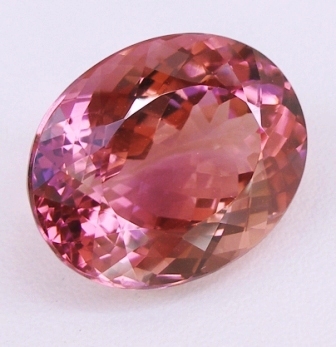
[Photo copyright of Anfilófio Bastos. Please click on the photo at left to see the full screen image in all its glory! Or, click on this text to go to a collection of photos of stunning examples of the finest imperial topaz from the region of Ouro Preto, Minas Gerais!]